
Non-Toxic Kitchen Cookware & Tools: What I Removed to Feel Better Every Day
Updated: Dec 28, 2025
A Holistic Guide to Safer Pots, Pans, Cutting Boards, and Utensils for an Eco-Conscious Kitchen
Ever feel foggy-headed after cooking a simple meal? Or notice your energy dip even though you’re eating “well”? For years, I blamed it on my busy life in Tel Aviv—teaching yoga, working, cooking daily, and juggling everything. Nothing dramatic, just that low-level fatigue that seems normal until you start questioning it.
At some point, I began connecting the dots. The cookware I used daily, the tools touching hot food, and the cutting boards shedding tiny particles all contributed to how I felt. This wasn’t about fear; it was about awareness. I realized that our kitchens can either support our energy or quietly drain it.
So, I started making simple swaps. non-toxic, holistic kitchen
Why Plastic Is the First Thing to Go (Especially Cutting Boards)
Even plastic labeled “food-safe” or “high-heat safe” isn’t inert! Research suggests that plastic can release microplastics when scratched, heated, or exposed to acidic foods—and cutting boards are one of the biggest culprits.
I personally would never use plastic cutting boards.
Over time, they develop grooves that:
Trap bacteria
Are hard to clean fully
Shed microscopic particles into food
What I Use Instead:
Hardwood cutting boards for vegetables and herbs (natural antibacterial properties + long-lasting)
Glass or stainless steel boards for meat (easy to sanitize in the dishwasher)
I also removed plastic containers, lunch boxes, and reusable bottles—especially for hot drinks or lemon water. Glass and stainless steel are easier to clean, more durable, and don’t interact with food.
My personal rule:
If it’s plastic and touches hot food or liquid regularly, it doesn’t stay in my kitchen.
Nonstick Cookware: Convenient, but Worth Reconsidering
Nonstick pans have been kitchen staples for decades. While some older PFAS chemicals have been restricted or phased out in recent years, many newer coatings still lack long-term, independent research.
This means:
Nonstick coatings can degrade under high heat
Scratches increase the risk of material transfer
Acidic foods (like tomatoes or lemon) may accelerate wear and release toxins
There’s no need for panic—but there is room for caution!
What I Cook With Now:
Stainless steel for everyday cooking
Cast iron for soups, stews, and frying
Pure ceramic cookware for acidic or slow-cooked meals
These materials are stable at high temperatures, long-lasting, and widely considered safer alternatives for your body and the environment.
Baking Without Silicone: Why I Choose Glass & Ceramic
Silicone bakeware is often marketed as safe, but many people (myself included) notice a strong chemical smell when it heats up. That was enough for me to question whether it belonged in my oven.
Additionally:
Silicone is highly processed
Recycling options are limited
Quality varies widely between brands
My Baking Staples:
Glass baking dishes (Pyrex-style)
Pure ceramic dishes (no coatings)
They don’t absorb odors, don’t off-gas, and last for decades.
The food simply tastes… clean!
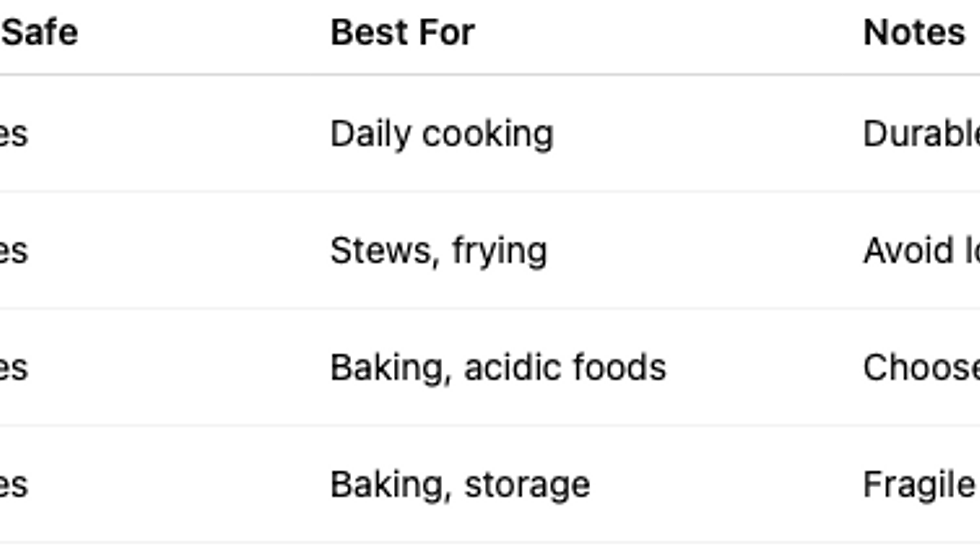
Non-Toxic Kitchen Cookware Comparison (Quick Guide)
Your 5-Minute Kitchen Toxin Audit
Grab a pen and do this once:
Do you use scratched or high-heat nonstick pans?
Are your utensils (used for hot food) plastic or silicone?
Are your cutting boards deeply grooved plastic?
Do drinks or hot food touch plastic daily?
Do you bake with silicone or non-stick coated trays?
You don’t need to change everything at once. Start from the worst-most used. One swap at a time is enough!
Small Swaps, Stronger Days
Start with your most used pans and your cutting board. Notice how your kitchen feels—and how you feel. New non-toxic kitchen cookware is not cheap, but I can say that they are also very good quality and durable. Look at it as a long-term investment in your kitchen and health!
Embracing a Holistic Kitchen
Creating a holistic kitchen is not just about the items we use; it’s about the energy we cultivate. Each swap you make contributes to a healthier, more vibrant space. I encourage you to take your time. Enjoy the process of discovering new tools and materials that resonate with you.
Connecting with Your Kitchen
Your kitchen should be a sanctuary, a place where you feel inspired to create nourishing meals. As you make these changes, take a moment to reflect on how they affect your cooking experience. Are you feeling more energised? Is your food tasting better? These small adjustments can lead to significant shifts in how you feel overall.
The Joy of Cooking
Cooking should be a joyful experience! When you use safe, non-toxic materials, you can focus on the joy of preparing meals rather than worrying about hidden chemicals. Embrace this journey! It’s about more than just cookware; it’s about nurturing yourself and your loved ones.
Conclusion
In conclusion, making mindful choices in your kitchen can lead to a healthier lifestyle. Remember, you don’t have to overhaul everything at once. Start small, and celebrate each swap you make! Your body and mind will thank you for it. Let’s create kitchens that nourish us, body and soul!



Comments